
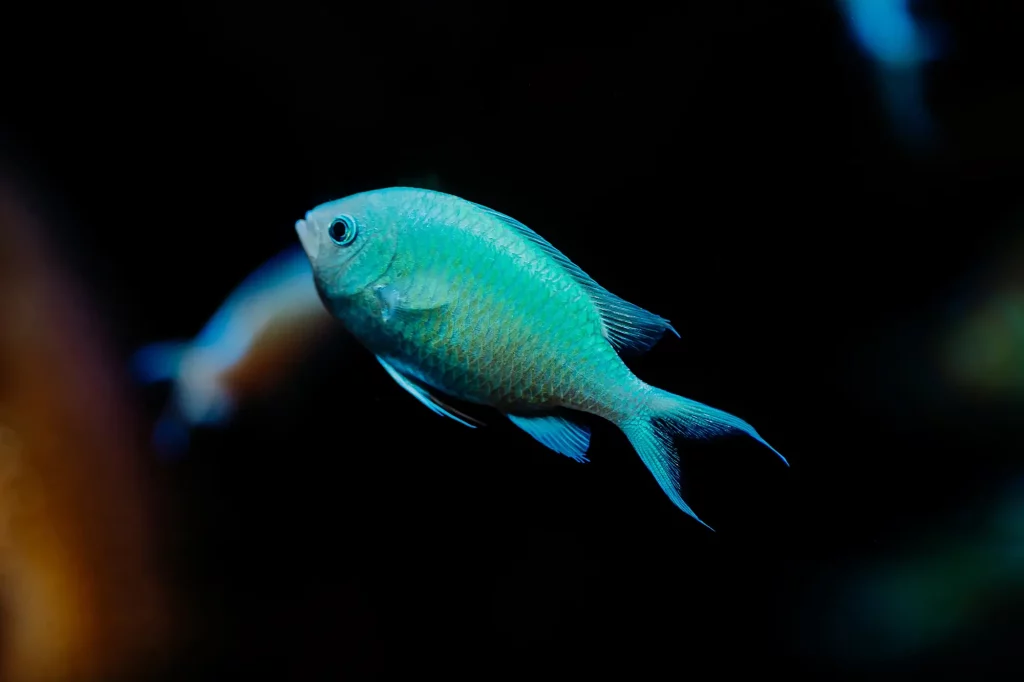
Do you want to brighten up your tank with beautiful and active saltwater fish? Look no further than the Blue Green Chromis Damselfish.
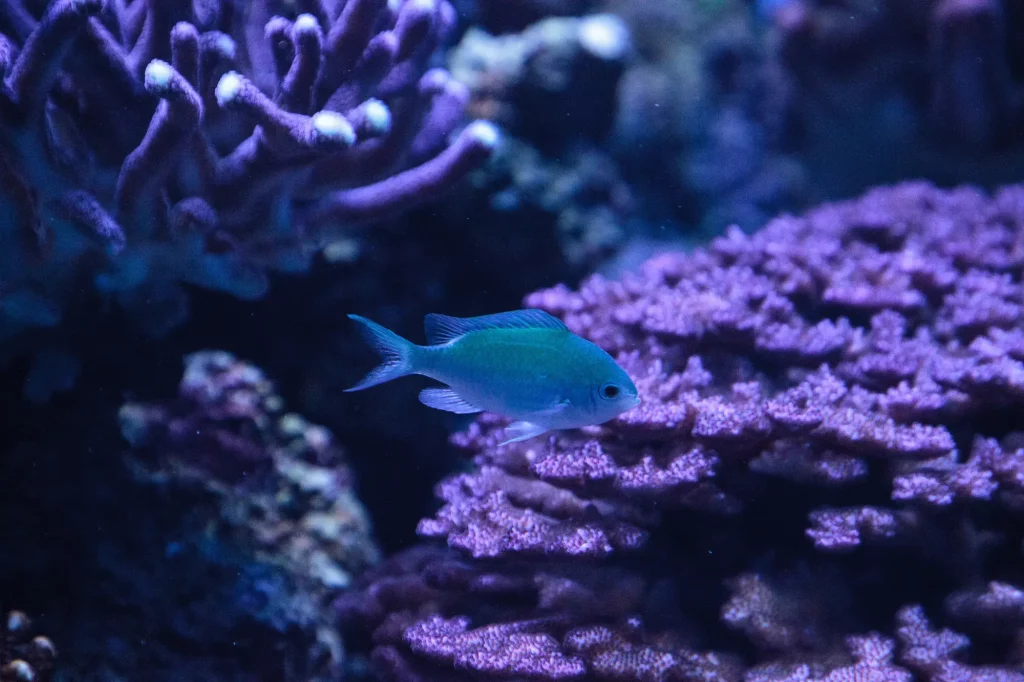
Also known as Green Chromis, Green Reef Chromis, and Blue Green Reef Chromis, these little fish are shimmering creatures of light green and blue. Being from the Damselfish family, this species is very reef-friendly and can be a great addition to your aquarium if you care for them accordingly and responsibly.
So let’s dive into what you need to know before adding Blue Green Chromis to your tank!
Chromis Damselfish, Species Overview:
Chromis spp.
Common Name(s): Blackaxil/Green chromis (chromis atripectoralis), Blue chromis (Chromis cyanea), Sunshine/Olive chromis (Chromis insolatus), Blackbar chromis (Chromis retrofasciata), Purple chromis (Chromis scotti), Vanderbilt’s chromis (Chromis canderbilti), Blue green chromis (Chromis viridis)
The most popular choice of Chromis Damselfish for a saltwater aquarium is the Blue Green Chromis. These fish are far from shy and are very active. Even though they do sleep in small spaces during the night and require little hiding spots, they generally enjoy schooling and swimming out in the open parts of tanks where you can see them well.
The only aggression they seem to show is within their own group to establish a pecking order, and they are usually quite friendly with other tank life. However, as with a lot of smaller aquarium reef fish, it would be best not to group them with other species that are larger and more aggressive as you may run the risk of them being eaten!
Natural Habitat and Distribution:
Distribution
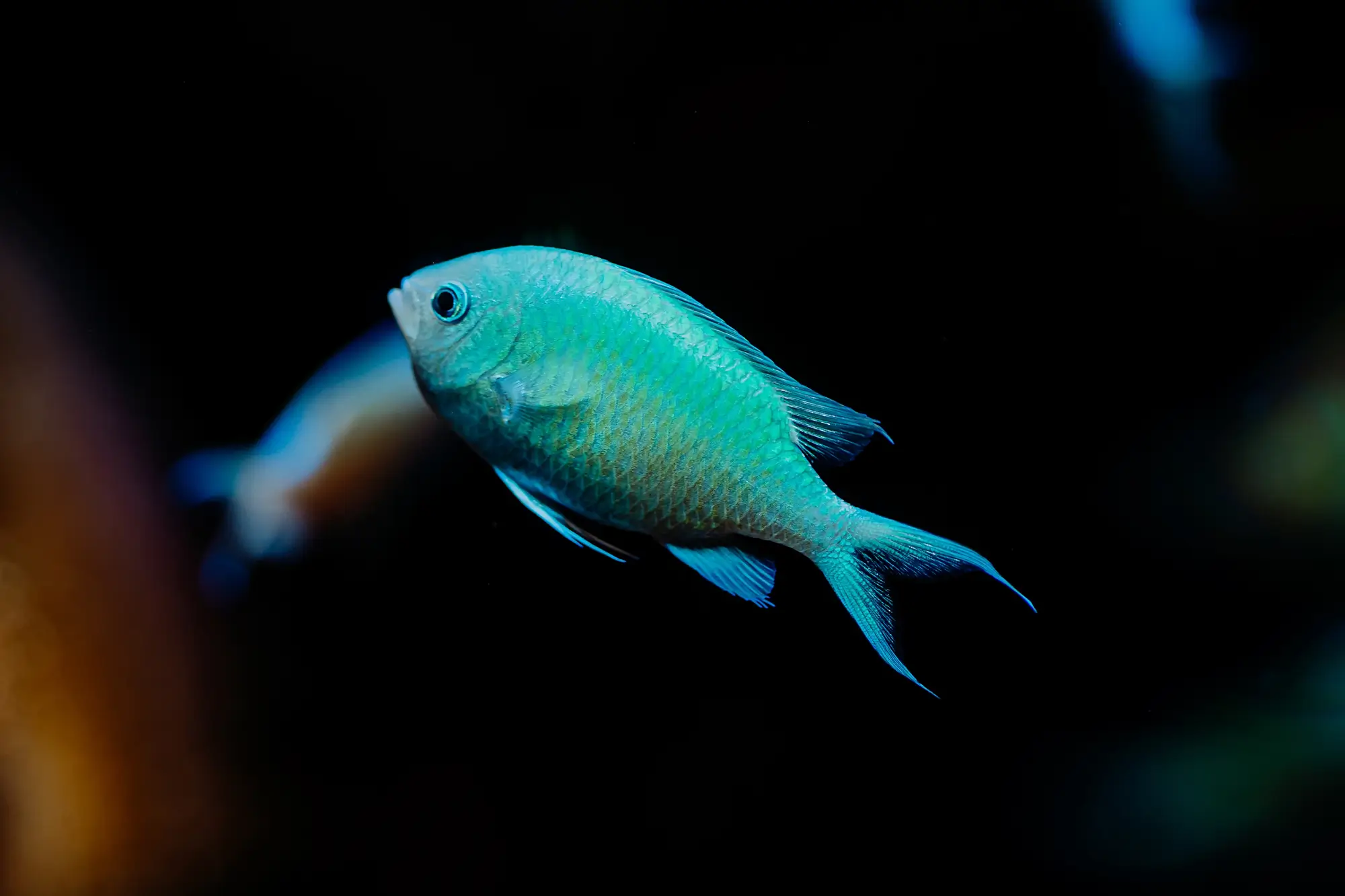
The natural habitat and distribution of the Blue Green Chromis lies in reefs and lagoons of the Indo-Pacific and South Pacific Oceans. They can be found schooling these sub-tropical waters in depths between 1 to 12 meters.
Chromis species are extremely numerous most anywhere a coral reef occurs. They are found worldwide in tropical or subtropical seas. From Hawaii to the Red Sea, the Philippines to the Florida Keys, if there is a warm water reef, chances are very good that Chromis can be found nearby.
Maximum Size
Maximum Size Chromis damselfishes range from 2 – 6.3 inches (5 – 16 cm)
Care Requirements
Minimum tanks size is 30 gallons for most of these fish, but they enjoy being kept with their own kind so larger tanks are great. They are a bright and active fish that provide interesting displays when kept in groups of about six. In fact, these damsels will do best in an aquarium where they are the dominant member(s) with a few other less aggressive species in the same tank.
Sourcing Blue Green Chromis / Chromis for Sale
Reef Fish Guide designation
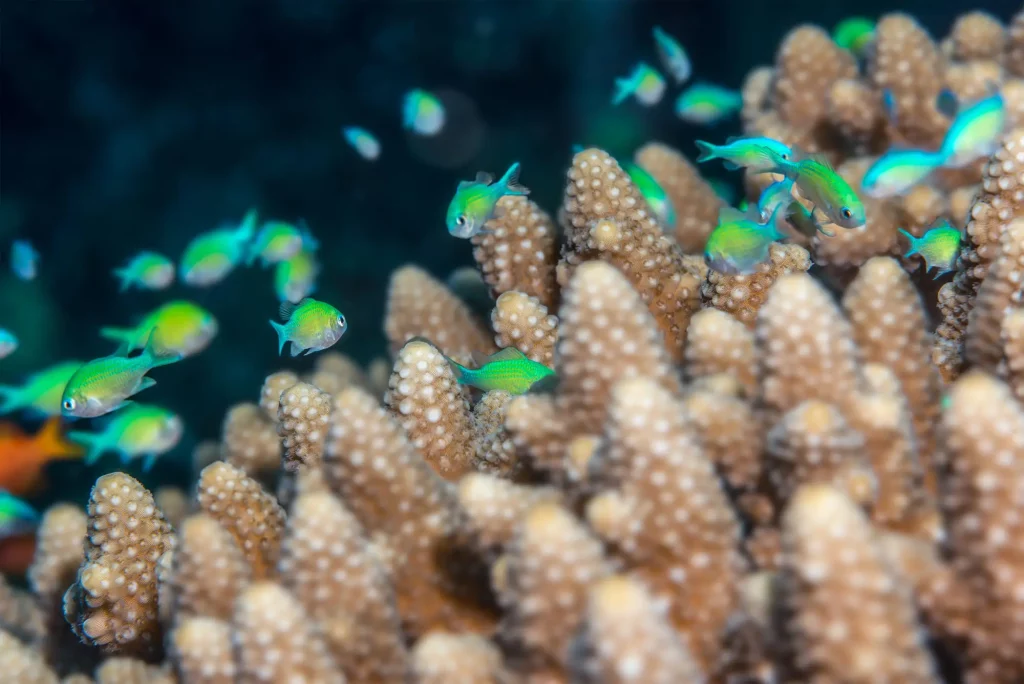
Chromis damselfishes are sustainable aquarium choices because they are plentiful in the wild and are currently not overcollected. They are a hardy choice that will last for years as long as adequate food and habitat are maintained.
In the wild, Blue Green Chromis are classed as Least Concerned by the IUCN Red List of Threatened Species, however, current population trends are shown to be decreasing. This is due to threats such as habitat loss and overfishing. Blue Green Chromis and Damselfish in general rely largely on coral reefs for shelter and food, thus the destruction of this marine environment due to climate change, harmful fishing practices, and irresponsible marine tourism pose a significant threat to their populations. Furthermore, wild populations of the Blue Green Chromis are also heavily exploited in Southeast Asia for the aquarium trade.
Thus, it is a responsible choice to obtain your aquarium Blue Green Chromis from sustainable captive breeders in order to ensure a reduced impact on their existing populations in the wild.
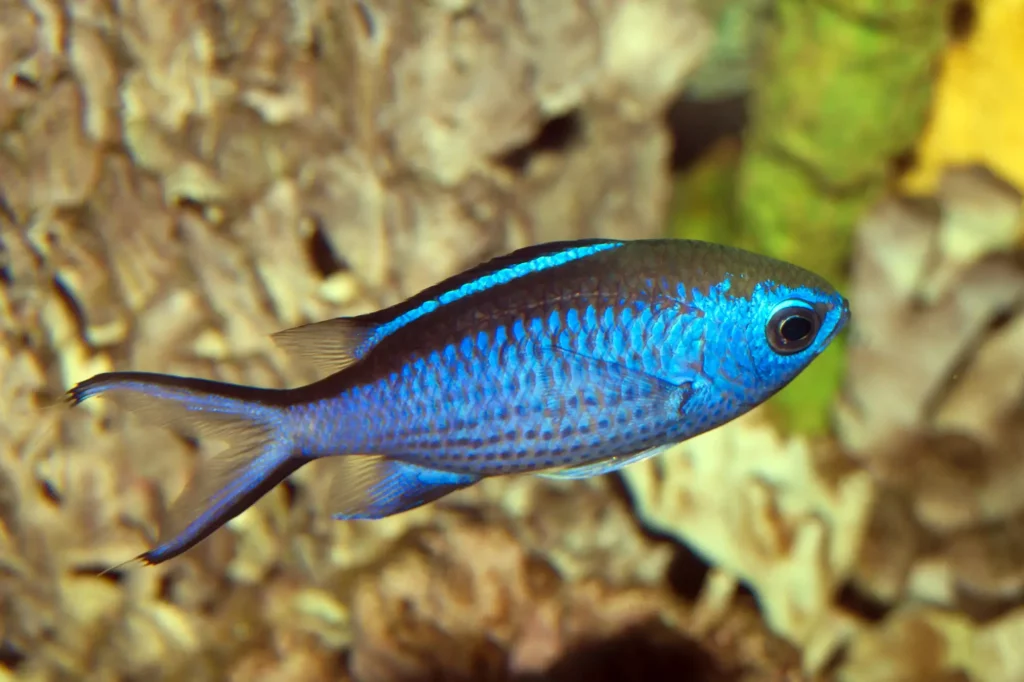
In addition to Blue Green Chromis being a popular choice for aquarium hobbyists, there are also a handful of other species from the Damselfish family that can be fun too. These include Yellow Tail Damselfish, Azure Damselfish, Talboti Damselfish, and Blue Chromis.
Pricing and Selection:
Blue Green Chromis and usually a lot of wild-caught reef fish are often less hardy and resistant when it comes to capture and life in a tank. Generally speaking, captive-bred fish are more likely to thrive in aquariums and are less likely to die due to stress or inability to adapt.
What’s more, wild-caught Blue Green Chromis often come with illnesses like Uronema. This is a parasite that lives on fish and can kill them. Uronema can infect from one fish to the next through direct contact, or also through floating detritus in the water column. This is something you do not want in your tank at all as it is also extremely difficult to eradicate without simply euthanizing your fish and cleaning out the tank. Luckily most fish have an immune system that can naturally fight off Uronema, however, unfortunately, Damselfish are more susceptible to being plagued by this issue.
Thus, captive-bred Blue Green Chromis can be a safer and more sustainable option for your aquarium and the other organisms that reside within it.
You can find Blue Green Chromis from sustainable captive breeders sold online at these stores:
| Supplier | Type, Size | |
|---|---|---|
| Live Aquaria | Blue Green Chromis, 4 inches | VIEW LATEST PRICE |
| Petco | Blue Green Chromis, 3 to 4 inches | VIEW LATEST PRICE |
| The Biota Group | Blue Green Chromis, 3 to 4 inches | VIEW LATEST PRICE |
Feeding
Blue Green Chromis are omnivores, meaning that they enjoy meaty foods as well as plant-based foods such as nori and algae.
When looking for food items to enhance the color of your Blue Green Chromis, spirulina is a good option for a natural enhancer, as it contains properties and nutrients that target the blue and green pigments on fish.
These fish eat a variety of foods but it is important to offer enriched foods to prevent color loss from some of the more brilliant species. They should be fed 3 times a day and they like meaty items such as mysid shrimp, vitamin-enriched brine shrimp, as well as herbivore flakes/pellets and frozen preparations.
Longevity and Tips for Maintaining Blue Green Chromis
With care, Blue Green Chromis can live for 8 to 15 years in captivity. Because they are known to express territorial behavior and bully smaller fish in their group, there are a few things that can be done to avoid this and achieve a harmonious tank environment.
The first is to ensure that there is enough space. Sellers suggest a tank size of at least 30 gallons, however, if you’re planning on getting a group of Blue Green Chromis then the bigger the tank, the better.
The second is to increase the frequency and quality of food. This will keep them from being hungry and will normally reduce aggression.
The third is to have tank mates that are slightly larger than the Blue Green Chromis, though not more aggressive. This will help keep them distracted from infighting, however not too worried that it causes stress. A good option for this kind of mediating fish species can be the Lyretail Anthias.
Compatibility:
Since, Chromis damselfishes are only mildly aggressive and non-predatory, they have excellent compatibility in reef tanks. A dominant individual may occasionally pick on subordinate members, but this is not usually a problem if the group is large enough. They tend to flourish when larger fish are not present in the tank. The presence of the larger fish will not necessarily spell doom for the Chromis, but it will make them work harder to obtain enough food, and will likely discourage natural schooling causing them to remain closer to the rockwork.
Please note: It is common for hobbyists to buy Damselfishes as their first fish to place into a newly setup aquarium as it goes through the water cycle. Often times this isn’t the best idea, as the territorial personality of damselfishes makes it nearly impossible to add more fish in the future. It is best to cycle the aquarium using common techniques that help build up the appropriate bacteria necessary to support marinelife and then introducing several species at once until the capacity of the aquarium is reached.
Ask your supplier about the health of their Chromis as they are prone to bacteria infection, as seen in this video:
Summary
Blue Green Chromis are a fun and attractive fish to have in any aquarium. Though they require some careful planning and maintenance, if you source them ethically and care for them accordingly, they will be a bright and beautiful addition to your aquarium!
FAQ Corner
How many Blue Green Chromis should I keep?
This depends on the size of your tank and the amount of life already present. 30 gallons is the suggested water capacity for 1 Blue Green Chromis, and they do better in groups of odd numbers.
How much does a Green Chromis cost?
A Green Chromis is another name for Blue Green Chromis. Thus, if ethically sourced, they can cost between USD 23.99 and USD 162.35 depending on the seller.
Can Blue and Green Chromis live together?
Yes, they can. They are both known to be non-aggressive outside of their own groups, and the presence of Blue Chromis can actually aid in distracting the Green Chromis from infighting.
Do Chromis hide at night?
Yes, Chromis prefer to sleep in small spaces and crevices.